An online program manager (OPM) is a private company that helps a university launch and run online degree programs. The university keeps accreditation, faculty, admissions decisions and the degree itself. The OPM provides some or all of the rest: up-front capital, market research, marketing and lead generation, enrollment call centers, instructional design, student support, clinical placements and sometimes the technology platform. It is paid either with a share of tuition or with fixed fees.
The model was built for a specific buyer: a selective nonprofit or public university with a strong brand, no in-house digital marketing and no appetite to put millions of its own dollars at risk. 2U showed how well it could work. Its first program, an online Master of Arts in Teaching with USC's Rossier School of Education, launched in 2009 and grew into one of the largest teacher-preparation programs in the country. Fifteen years later 2U was in Chapter 11, and the contract that made it successful was the main reason.
What does an OPM do?
A full-service OPM in the 2010s typically handled:
- Market research to pick degrees with demand, often in social work, nursing, education, counseling, public health, business and data science.
- Capital for course production and launch, commonly several million dollars per program before it matured (reported).
- Marketing and lead generation, mainly search and social advertising under the university's brand.
- Enrollment counseling, the call centers that turn inquiries into applications.
- Instructional design and course production with university faculty.
- Student support and retention coaching.
- Clinical or field placements for practice-based degrees.
- A learning platform, in some cases.
The university decided who was admitted, who taught and what the degree required. That division of labor is what made the model legal, as explained below.
How do OPM contracts work?
There are two basic contract types, and the choice between them decides who carries enrollment risk.
| Feature | Tuition revenue share | Fee-for-service |
|---|---|---|
| OPM paid by | A share of tuition, commonly 40–60% | Fixed fees per service, sometimes cost-plus |
| Who funds the launch | The OPM | The university |
| Who bears enrollment risk | Mostly the OPM | The university |
| Contract term | 7–15 years, often with exclusivity and tail payments | 1–5 years, modular |
| OPM cash profile | Losses for several years per program, then high margins | Thin but immediate service margins |
| Regulatory exposure | Depends on the bundled-services exception | Low |
Why a revenue share is really an insurance contract
The book's central point about OPMs is that a revenue share is insurance. The university pays roughly half its tuition to transfer launch and enrollment risk to the OPM. If the program fails, the OPM eats the loss. If it succeeds, the university discovers it paid a very high premium, and keeps paying it for a decade.
A stylized model in the book makes this concrete. Take an online master's program that grows to 750 students paying $25,000 a year in net tuition, earning $100 million over eight years.
| Outcome over eight years (stylized, $ millions) | 50% revenue share | Fee-for-service ($1.5m a year) |
|---|---|---|
| OPM cumulative cash at its low point | –7.4 (year 2) | Never negative |
| OPM final cash | 15.6 (IRR about 27%) | 3.6 |
| University cumulative cash at its low point | Never negative | –8.4 (year 1) |
| University final cash, after instruction costs | 20.0 | 32.0 |
| University result if enrollment reaches only 60% of plan | 12.0 | 4.0 |
Under the revenue share, the OPM funds about $26 million of development and marketing and does not break even until year five. Under fee-for-service, the university funds the launch and keeps $12 million more if the program succeeds, but only $4 million if enrollment falls short. Neither contract is wrong. They price risk differently. A fair long-term revenue share would step the OPM's percentage down once launch risk is gone. Most did not.
Why is the OPM revenue share legal?
The Higher Education Act bans colleges that receive federal student aid from paying any commission or incentive payment based on success in securing enrollments. Paying a company half of tuition, partly for recruiting students, looks like exactly that.
The industry survived on a 2011 Department of Education "Dear Colleague" letter, known as the bundled-services exception. It allowed tuition-share payments to an unaffiliated third party if recruiting was part of a bundle of services, was not paid for separately, and the institution made admissions decisions. As the book puts it, most of the OPM industry "was built on that guidance letter, not on a statute or regulation."
That foundation was tested from 2019. Researchers analyzed OPM contracts, journalists examined programs at Columbia, USC and elsewhere, and a 2022 GAO report found the department had limited insight into OPM arrangements. In February 2023 the department issued guidance that would have treated OPMs and many other vendors as third-party servicers, jointly liable for federal aid funds. After more than a thousand mostly critical comments it suspended the guidance and in late 2024 said it would rescind it. It never took effect, but it frightened university boards and gave them leverage to renegotiate. Our case study on why 2U failed traces how that pressure combined with debt.
Why did the OPM model break?
The book identifies six forces that combined between 2019 and 2024:
- Rising student acquisition costs. Every brand-name university bid on the same search keywords, against Coursera degrees, mega-universities and each other. Revenue-share economics assumed a fixed cost per enrollment.
- Successful programs revealed the price. Deans asked why the OPM still kept half the tuition in year eight.
- Reputational blow-ups, most visibly around USC's online social-work and education programs with 2U, which USC wound down in 2023–24.
- The regulatory threat from the 2023 servicer guidance.
- Debt-funded expansion that left 2U unable to absorb a slowdown.
- Normalizing demand after the pandemic.
The industry consolidated. Pearson sold its US OPM unit in 2023. Wiley sold its university-services business to Academic Partnerships, which renamed itself Risepoint. 2U moved to fee-for-service and "flex" contracts and filed for Chapter 11 in July 2024. Fee-for-service providers and in-house university units gained share.
Who won online higher education instead?
The biggest winners in online degrees were not OPMs or technology companies. They were universities that ran online operations themselves at scale.
Western Governors University, a fully online, competency-based nonprofit founded by 19 governors in 1997, reported about 192,600 students enrolled in mid-2025. Southern New Hampshire University built an online arm of more than 160,000 students (reported; counting methods vary). Arizona State University's in-house unit reported more than 119,300 degree-seeking online students in 2025–26. Georgia Tech's online master's in computer science showed that a top program could be offered for about $7,000 in total without an OPM.
These institutions won through operations: centrally designed courses, monthly start dates, round-the-clock support, credit for prior learning, national marketing and low flat prices.
Grand Canyon Education took the OPM idea to its extreme. In 2018 it sold Grand Canyon University to a newly formed nonprofit and kept a services contract for about 60% of the university's adjusted gross revenue. In 2025 it reported $1,106.1 million of service revenue on about 136,239 partner enrollments. The structure is efficient and has drawn long-running questions about who controls the institution.
How should a university evaluate an OPM today?
The book frames the right questions for a provost or general counsel:
- Is this risk transfer or a service? If the university can fund the launch, fee-for-service usually keeps more of the upside.
- Does the share step down? A fair revenue share falls once the program is established.
- What is the cost of acquiring one enrolled student, and what happens to it when fifty competitors launch the same degree?
- What are the student outcomes? High price, low completion and weak earnings attract journalists, plaintiffs and regulators, in that order. The 2025 federal reconciliation law adds an earnings-premium test (implementation details still settling).
- What protections exist if the vendor fails? The 2U case points to content escrow, data access and step-in rights.
- Why won't the university do this itself in five years?
Which factor of the learning equation does the OPM model turn on?
The OPM is a bet on the third factor of the learning equation: an affordable route to the payer. The OPM's whole value was that it could reach students more cheaply than the university could, and finance the reach. When acquisition costs rose and universities learned to market themselves, that factor shrank. The second factor, a willing payer, then weakened as universities balked at the tuition share and students balked at the price. Policy, in the form of a single guidance letter, was the weather around both.
The takeaway
An online program manager runs the business side of a university's online degree in exchange for a tuition share or a fee. The revenue-share version worked as insurance for universities that would not risk their own money, and it grew into a multi-billion-dollar market on the back of a 2011 guidance letter. It broke when student acquisition costs rose, successful programs revealed how much the premium cost, and regulators and journalists asked who benefited. The broader context sits in our edtech business model guide, and Chapter 7 of The Learning Equation works through OPM economics in full.
Frequently asked questions
What percentage of tuition do OPMs take?+
Traditional revenue-share contracts commonly gave the OPM about 40–60% of tuition, sometimes up to about 65% (reported, from contracts disclosed through public-records requests), for terms of seven to fifteen years. Fee-for-service contracts instead charge fixed fees per service.
Are OPMs legal?+
Yes. Tuition-share payments to OPMs rest on a 2011 Department of Education guidance letter, the bundled-services exception, which allows them if recruiting is bundled with other services and not paid per enrollment. A 2023 attempt to widen oversight of OPMs was suspended and later withdrawn.
Which companies are OPMs?+
The model was pioneered by Embanet, Deltak and Academic Partnerships and scaled by 2U, Wiley, Pearson and Keypath. After 2023 the market consolidated: Pearson sold its US unit, Wiley sold its unit to Academic Partnerships (renamed Risepoint), and 2U restructured in Chapter 11.
Do students know when a degree is run by an OPM?+
Often not. Early OPM programs carried only the university's brand, which was part of the value proposition. Press investigations from 2019 onward made the role of OPMs more visible and fed criticism of high prices for online degrees.
Go deeper in The Learning Equation
Chapters
Industry studies
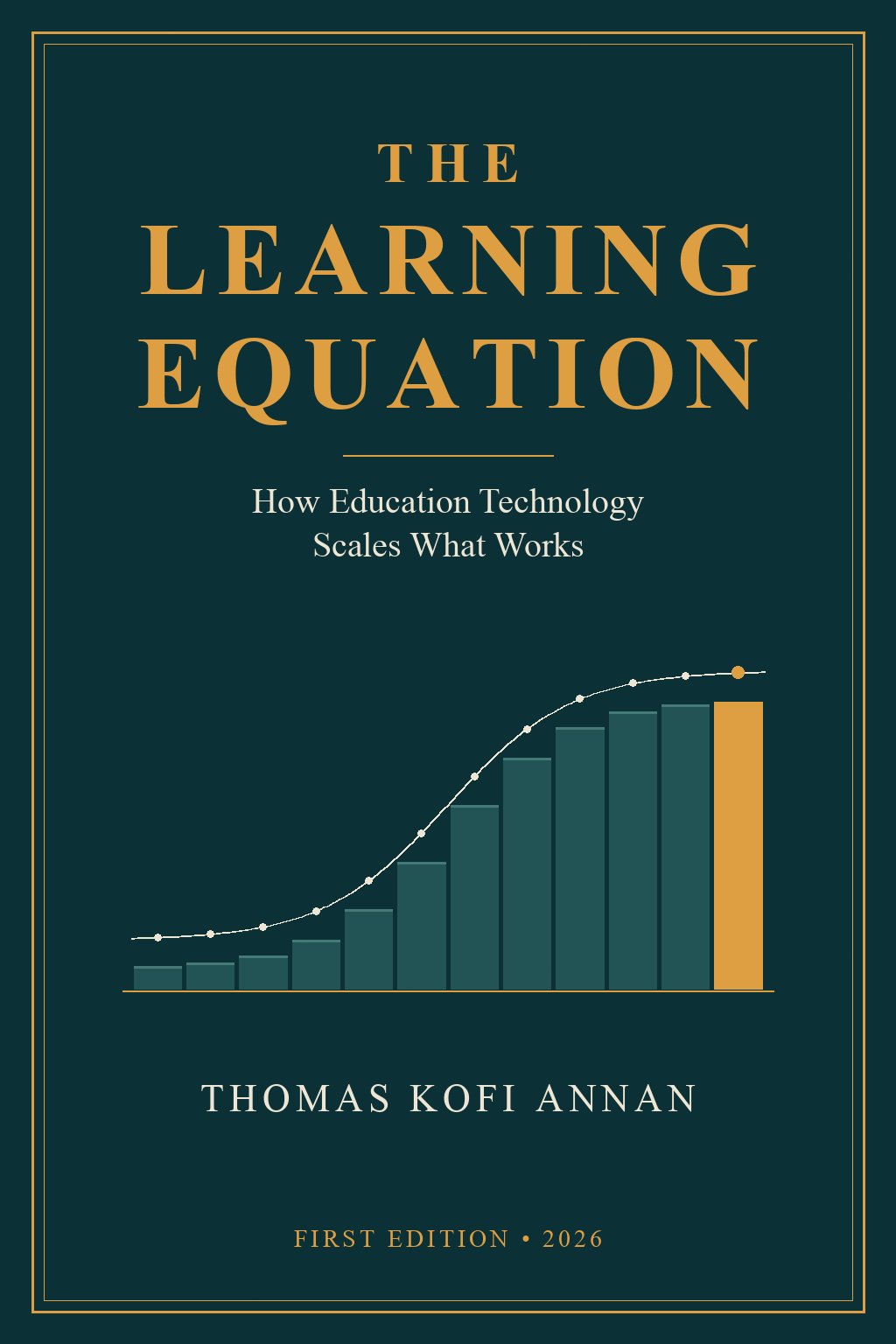
From the research behind The Learning Equation
How Education Technology Scales What Works
25 chapters, 23 industry studies, 100 companies and 847 strategic moves.
See the bookEducational content, not investment, legal, tax, medical or engineering advice. Figures marked “reported” come from filings and published sources that have not been independently audited.